
How to Tier Your Trade Show Giveaways to Maximize Booth ROI
Learn how to structure a tiered trade show giveaway strategy that aligns merchandise spending with lead value, controls event costs, and boosts real post-show ROI.

Exhibiting at fall and winter trade shows represents a substantial investment for any business. Between booth footprint fees, travel expenses, custom displays, and staffing, marketing teams are under increasing pressure to prove the direct return on every dollar spent. Handing out generic items to every passerby who walks the perimeter aisle drains budgets quickly while delivering little measurable business value. By shifting to a structured, tiered promotional product strategy, event marketers can protect their bottom line, encourage deeper sales conversations, and ensure their brand stays on the desks of genuine decision-makers long after the exhibit hall clears.
The Math Behind Trade Show Giveaway Budgeting
A frequent error in event planning is calculating promotional merchandise as a single, flat cost per badge scan. If your booth budget allocates eight dollars per visitor and your team hands that item to five hundred casual visitors who simply grab items from the counter edge, you have spent four thousand dollars with negligible sales attribution. A more disciplined approach splits your audience into distinct qualification brackets and allocates spending relative to expected deal size and lead maturity.
Consider a standard B2B trade show audience. Typically, seventy percent of booth interactions represent casual visitors or non-buying attendees, twenty percent represent qualified prospects who engage in a substantive five-to-ten-minute product conversation, and ten percent represent pre-booked meetings, active pipeline accounts, or senior decision-makers. Aligning your per-unit investment with these ratios ensures your highest-value items go directly to individuals with purchasing authority.
Building a Three-Tier Giveaway Strategy
Organizing your merchandise into functional tiers gives your booth staff clear operational guidelines. Instead of leaving all merchandise on display tables, staff members reserve higher-tier gifts under the counter or in meeting areas, using them as deliberate relationship tools during conversations.
Tier 1: Practical Booth Traffic Tools (Under $7)
Tier 1 items serve as functional conversation starters for attendees who stop to scan a badge or ask general questions about your services. These items must be lightweight, easy to carry around the floor, and immediately practical so they do not end up left behind in hotel rooms.
The Cork Notebook With Pu Bamboo Structure And Pen (from C$5.60) offers a tactile, eco-conscious option that attendees can immediately put to work during educational sessions. Its natural texture stands out from standard corporate stationery. For tech-heavy conferences where attendees juggle charging cables, power adapters, and earbuds, the Portable Storage Bag For Cable (from C$6.91) solves a direct travel pain point while keeping your imprint visible whenever they open their laptop bag.
Tier 2: Qualified Leads and Completed Demos ($7 to $12)
Tier 2 merchandise is earned, not freely taken. Booth staff present these gifts to prospects who complete a scheduled five-minute software demo, participate in a structured consultation, or share specific project requirements. Because the attendee has invested meaningful time with your team, the item should reflect a higher standard of utility and finish.
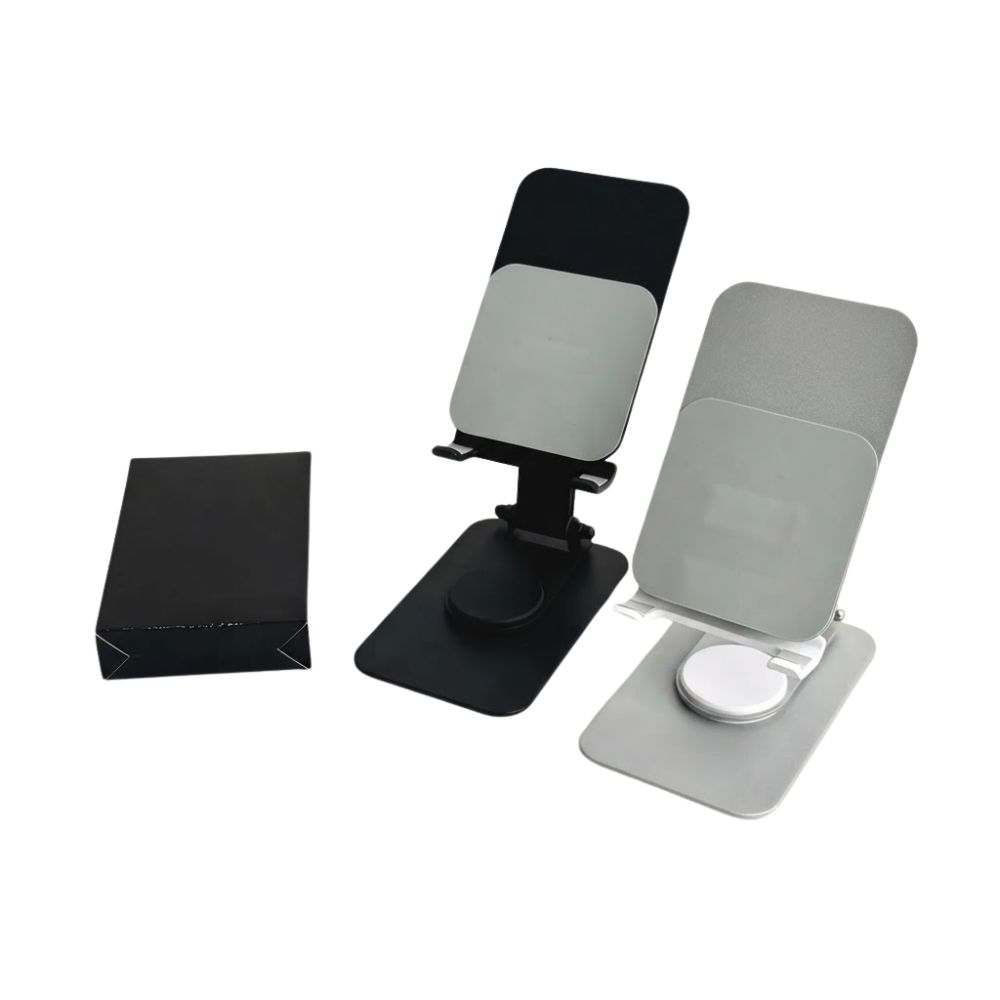
A sturdy desk accessory like the Metal Smartphone/tablet Stand Phone Holder (from C$8.96) earns permanent placement on an office desk, ensuring daily brand impressions during video calls and workstation tasks. Another sustainable daily-use choice is the Wheatware Cutlery Set - Stainless Steel Utensil With Wheat Straw Case (from C$7.15), which appeals to corporate professionals who pack lunches or travel frequently, aligning your brand with responsible everyday habits.
Tier 3: Executive Meetings and VIP Clients ($15 and Up)
Tier 3 items are reserved exclusively for executive meetings booked prior to the show, existing key accounts attending the event, or qualified buyers negotiating active proposals. These gifts should offer refined craftsmanship and presentable packaging suitable for a formal executive setting.
The Slate Coasters In Wooden Gift Box (from C$16.80) delivers an elevated tactile experience. Natural slate combined with warm wood packaging makes a dignified impression that executives are proud to display in their private offices or home studies, reinforcing the stability and premium quality of your partnership.
Four Common Trade Show Giveaway Pitfalls to Avoid
Even well-budgeted merchandise campaigns can underperform if basic event logistics and staffing practices are neglected. Keeping these four principles in mind prevents wasted spend:
- Placing all merchandise on the front table: Free-access tables encourage grab-and-go behavior from attendees who have no intention of engaging. Keep Tier 2 and Tier 3 items out of sight inside cabinet storage or behind podiums.
- Ignoring luggage constraints: Heavy, oversized, or liquid items often get discarded before attendees board their return flights. Focus on compact, durable products that fit neatly into standard carry-on luggage.
- Treating promotional items as lead bribes: Merchandise should reward engagement, not replace qualification. Booth staff should ask discovery questions before presenting a physical gift.
- Waiting until the final weeks to order: Rushed production limits branding customization methods, adds expedited freight surcharges, and restricts inventory selection. Planning your event merchandise six to eight weeks in advance ensures reliable delivery and lower landed costs.
A Step-by-Step Checklist for Trade Show Merchandise Planning
- Determine your interaction targets: Review past badge scan counts and calculate your target number of total booth visitors, completed demos, and executive meetings.
- Allocate budget across tiers: Assign approximately forty percent of your merchandise budget to Tier 1, forty percent to Tier 2, and twenty percent to Tier 3.
- Select functional, sustainable items: Choose items that solve travel or workplace needs and reflect your company's sustainability commitments.
- Brief booth staff on distribution criteria: Establish explicit rules for when each tier of merchandise may be handed out during booth conversations.
- Coordinate freight and venue receiving: Confirm venue marshaling yard dates or arrange direct delivery to your event hotel to prevent costly convention center handling fees.
- Integrate post-show follow-up: Mention the gift in your initial post-show email outreach to trigger visual recall of your conversation.
Tracking Post-Event Attribution
To evaluate the true return on your trade show promotional investment, track post-event engagement alongside your CRM data. Incorporating a discrete URL or QR code inside custom collateral or product packaging lets you monitor how many recipients visit dedicated landing pages in the weeks following the event. When sales representatives initiate their post-show discovery calls, referencing the specific desk tool or travel accessory provided at the booth creates an effortless conversational hook that separates your brand from dozens of generic follow-up emails.
Where to start
Review your event calendar for the upcoming quarter and identify your projected attendee counts for each show. By defining your qualification criteria today and curating two or three purpose-built merchandise tiers, you can equip your booth team with high-impact sales assets while keeping your event spend tightly controlled.
Products mentioned in this article



Frequently asked questions
How much should a company budget per person for trade show giveaways?
Budgets should be tiered based on attendee value rather than a flat rate. Practical mass traffic items typically range from $3 to $7, qualified demo participants receive items valued between $7 and $12, and pre-scheduled executive meetings warrant gifts of $15 or more.
How do you stop attendees from taking premium giveaways without talking to staff?
Keep mid-tier and VIP merchandise stored beneath registration counters, inside locked display pedestals, or in private meeting rooms. Train your booth staff to present these items individually as a thank-you only after completing a qualified conversation or demo.
When should trade show promotional merchandise be ordered?
For standard domestic inventory and custom decoration, place your orders six to eight weeks before the event setup date. This timeline allows ample room for digital proof approvals, production, and freight transit directly to your venue or hotel.
Context: Industry focus on trade show ROI metrics and event budgeting · Event marketing attendee engagement trends


